Prototype Investment Thesis
Prototype invests in crypto and AI to empower individuals, unlock entrepreneurship, and expand access to financial tools.

On this page
Prototype invests in frontier technologies that amplify individual agency in an increasingly digital and attention-driven economy. Two core drivers are central to this thesis: crypto is becoming an integral part of global financial infrastructure, while AI is making intelligence widely accessible. Both sectors are already lowering the barriers to capital formation and entrepreneurship, enabling individuals to create value at unprecedented scale. Prototype is designed to invest in the companies spearheading this new age of growth.
Gen Z offers the clearest signal of where this transformation is heading. At first glance, the world they inherited seems prosperous: technology continues to advance rapidly, global life expectancy has nearly doubled since 1950, GDP per capita has recovered strongly following COVID, and equity markets continue to reach record highs.
Yet beneath these rosy indicators lies growing disillusionment. Living costs have surged, pushing assets such as houses out of reach for Gen Z. Trust in institutions has also deteriorated as digital platforms are used to spread misinformation and influence public thought. Many young people feel both economically and psychologically constrained, disconnected from the systems that disseminate opportunity.
Although the system seems stacked against Gen Z, new technologies empower them to forge their own path. As AI and crypto become more accessible, more people will be able to build businesses, generate income, and participate in markets through their own means. As the first fully digital-native generation, Gen Z is uniquely positioned to leverage these tools, challenging traditional models of entrepreneurship and venture formation.
Economic Constraints on Gen Z
Gen Z is coming of age at a time when traditional paths to financial stability are breaking down. Instead of finding a steady job, buying a house, and starting a family, young adults are seeking increasing risk and viral acclaim, gambling their earnings away and spending money on material luxuries.
The Generational Homeownership Gap
The main cause of this financial nihilism is that most of Gen Z cannot afford long-term assets such as homes. In 2025, only ~27% of the oldest Gen Z cohort owns a home, compared to ~55% of Millennials, ~73% of Gen X, and ~80% of Boomers. The rate of homeownership is also slowing across generations. As the graph moves to younger generations, the ownership curve flattens; Gen X homeownership rose quickly as the cohort aged, Millennials had slower growth, while Gen Z has barely experienced any growth at all.

Source: Redfin — Homeownership Rate by Generation, 2025
Asset Inflation, Wage Stagnation, and Global Instability
Simultaneous asset inflation and wage stagnation have left young people across the U.S. unable to afford homes. After COVID, aggressive fiscal stimulus and monetary easing drove inflation even higher, forcing the Federal Reserve to sharply raise interest rates. While inflation has since cooled, the structural effects remain: new construction has slowed and homeowners locked into low pandemic-era mortgage rates are reluctant to sell. The result is a double squeeze for Gen Z, with limited housing supply on one end and slowed income growth on the other.
Geopolitical instability will likely compound these effects. Disillusionment with the free-trade model as reflected by protectionist policies like tariffs, rising U.S.-China tensions, and ongoing conflicts in Eurasia and the Middle East will continue to disrupt energy markets and supply chains, embedding a persistent instability premium into the global economy.
The deeper implication is not just declining affordability of long-term assets, but a growing sense among Gen Z that their economic prospects are doomed by forces outside their control, leading many to question the traditional pathways for building a stable life.
Erosion of Trust in the Digital Age
If housing affordability reflects the growing economic pressures facing younger generations, the digital environment they inhabit reveals their psychological pressures. Gen Z has grown up within the most connected information system in human history, yet this abundance has coincided with declining trust in the very platforms that distribute it.
Declining Trust in Media
Events such as the 2016 U.S. election led to widespread skepticism toward the media, when increasingly politicized coverage led many to question the credibility of news outlets. Algorithm-driven platforms amplified the spread of misinformation as automated bots flooded social media, further polarizing public discourse. Throughout this time, 67% of Americans felt made-up news caused them to question even basic facts. By the end of 2016, only one in three Americans still trusted the mass media. Today, trust is even lower, as only 28% of Americans believe in what they see on the news.

Source: Gallup — Trust in Media at a New Low
Behavioral Targeting and the Attention Economy
Meanwhile, corporations continue to refine their ability to shape consumer behavior through targeted advertising. In 2024 alone, $667 billion was spent on digital advertising globally. The majority of this spending is driven by behavioral targeting, in which platforms collect user data and sell advertisers access to audiences defined by browsing behavior and demographic profiles. Looking ahead, AI is likely to accelerate this dynamic as it enables enterprises to process vast datasets and generate personalized content at scale, further refining how information is filtered and presented.
Against this backdrop, Gen Z has grown to view the attention-driven, digitalized environment they were born into as a system designed to mold the way they think and feel for profit.
A Digitally Native Generation
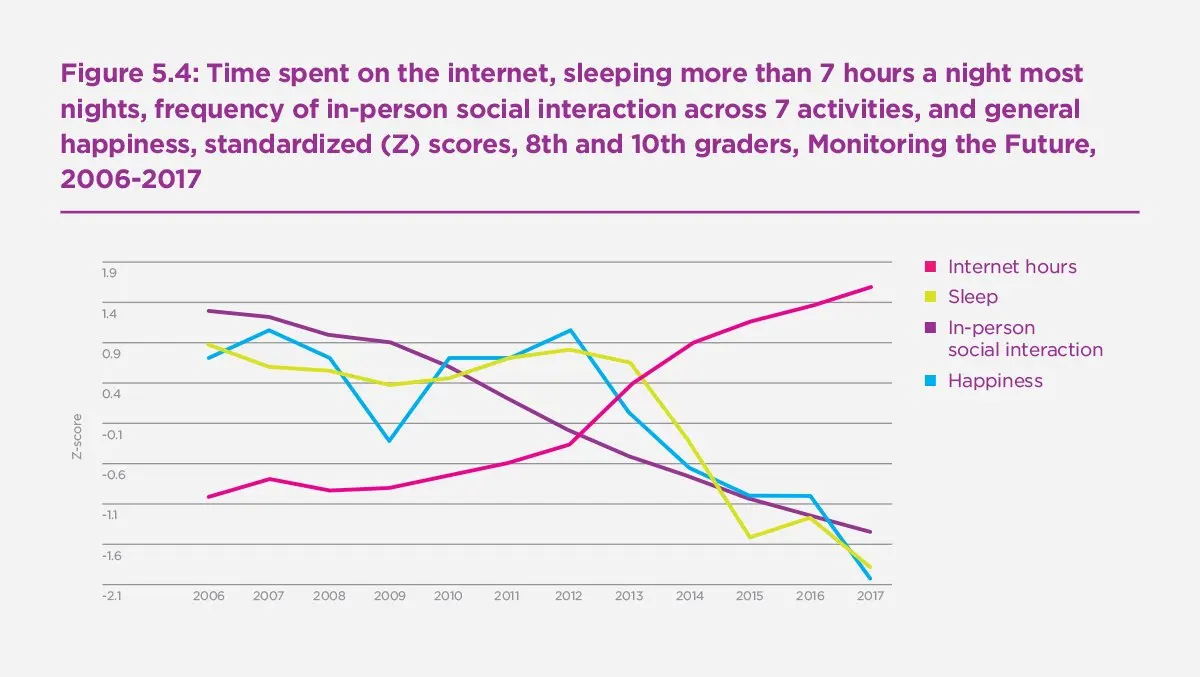
The economic and informational forces affecting Gen Z converge into a deeper psychological outcome. Screen time among young adults now averages eight to nine hours per day, while in-person interaction continues to decline. Roughly one in six people globally reports experiencing loneliness, with the highest rates among teenagers. Gen Z is more connected than ever, yet isolated and uncertain about its future.
Digital Substitutes for Connection
This psychological impact is most apparent in the social behavior of Gen Z. Today, more than half of Gen Z adults spend nothing on dating each month, reflecting how financial limitations are influencing relationships and long-term planning. Instead, many young people are turning to digital substitutes for connection. The market for AI companionship applications reached an estimated $28 billion in 2024 and is projected to exceed $140 billion by 2030, with platforms such as Character.ai already attracting tens of millions of users.
Consumption, Risk, and the Search for Escape
Being priced out of large, long-term assets has also pushed Gen Z toward higher levels of consumption and risk. Viral collectibles like Pop Mart figures, trading cards, and entry-level fashion items have seen explosive demand, replacing traditional expressions of identity and status within digitally native communities. Gen Z also accounts for roughly 34% of betting activity in the U.S., and about one in three members of the generation now views gambling as a viable form of investing, reflecting a greater appetite for risk-taking behaviors.
Overall, a clear pattern emerges: Gen Z is deeply fluent in digital systems, yet often socially isolated, financially limited, and skeptical of traditional institutions. When traditional paths to financial stability feel out of reach, many young adults turn to lotteries and luxuries in search of short-term dopamine and a chance of long-term escape.
Digital Arenas of Opportunity
Although the plight of Gen Z may appear bleak, the same forces pressuring young adults are also pushing them toward new opportunities. Young adults of today have shown remarkable tenacity, leveraging digital tools to adapt to an economy shaped by network effects. As digital natives, they intuitively understand how attention moves online and how it can be converted into economic value.
Crypto Markets: Trading Attention
Crypto is a clear example of how young, digital-native participants generate wealth by trading attention. In December 2023, Manifold’s Protail Thesis highlighted the growing trend of sophisticated retail traders using advanced techniques to trade high-risk assets such as memecoins. Since then, memecoin trading has become a billion-dollar industry:
- Pump.fun generated ~$1B in cumulative revenue across over 16.7 million tokens.
- Raydium generated over $1 billion in fees before PumpSwap launched in March 2025. Since then, PumpSwap has produced over $94 billion in trading volume and $180 million in fees.
- Photon boasts over $47B in lifetime volume and over $440 million in fees.
Even now, in the early days of the bear market, memecoin activity holds steady. Daily wallet activity has held steady and remained largely unfazed by the 10/10 market crash, and is now back to Q2 2025 levels when BTC was climbing to all-time highs.
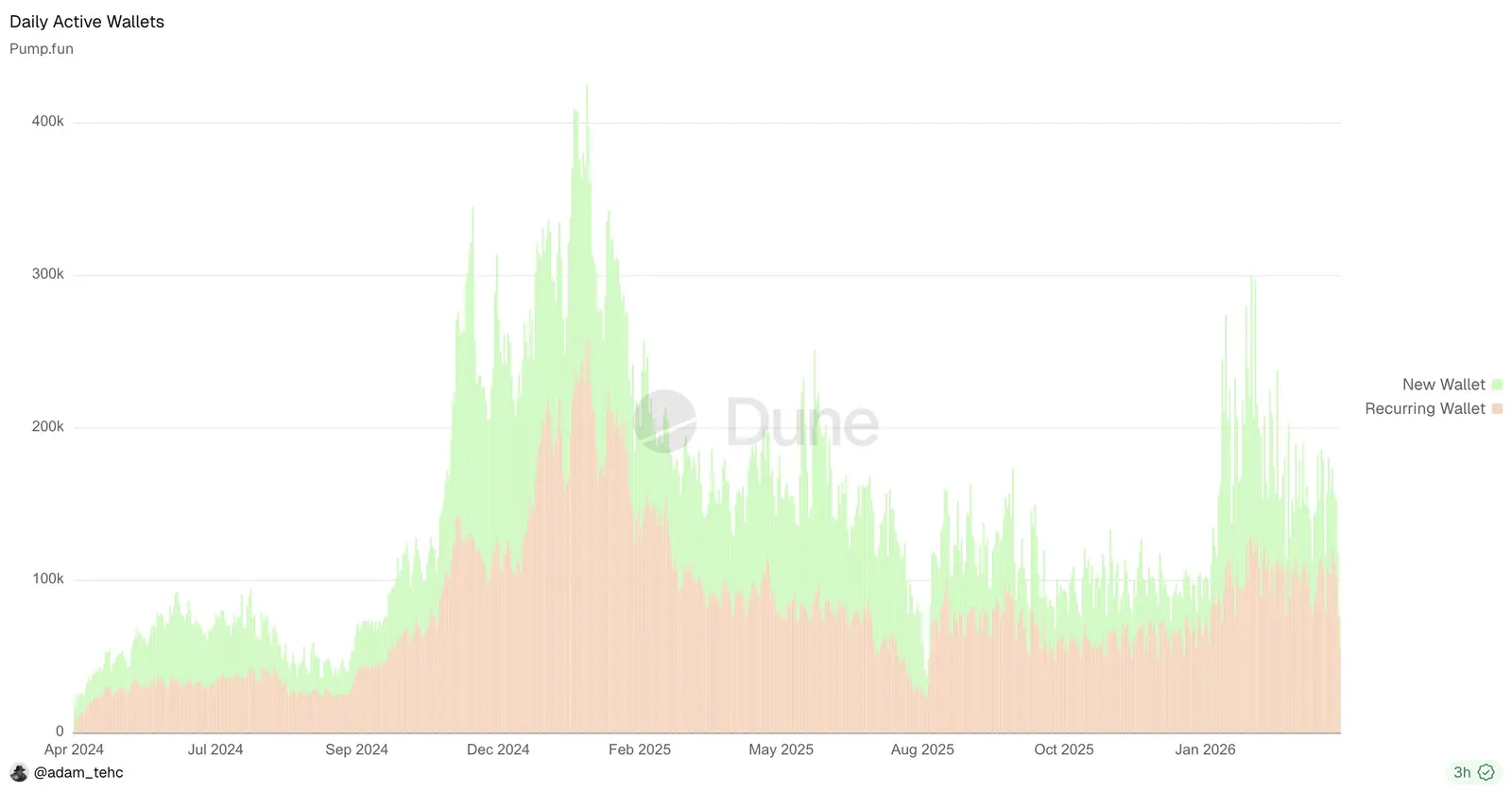
Source: Dune — Pump.fun Dashboard, as of March 16, 2026.
Unsurprisingly, crypto trading skews heavily toward younger users. A 2024 study found that individuals aged 18 to 35 represent nearly 60% of active crypto participants, and more than two-thirds report trading as their primary use of crypto. As younger generations become more comfortable operating within digital systems, they are drawn to technologies that allow them to capture economic value more directly.
AI as an Entrepreneurial Engine
While crypto has become ensconced within the digital landscape, AI has emerged as a new frontier. As the cost of intelligence falls, so too do the barriers to entrepreneurship. Tasks that once required entire software development teams can now be performed by individuals using AI tools. Having grown up navigating digital platforms, younger generations are particularly well positioned to benefit from this shift. Gen Z is comfortable treating software as a creative medium, using tools such as Claude, ChatGPT, Cursor, and Gemini to turn ideas into working products even without traditional engineering backgrounds.
Early examples of this trend are already emerging in the startup landscape. Nick Dobroshinsky founded EveryTicker, an AI-based financial research platform, at 15 years old. He wrote only about ten lines of code himself while prompting Anthropic’s Claude and other models to generate the rest of the software. Though Dobroshinsky had no marketing team, EveryTicker garnered about 50K monthly users through the use of AI-driven bots on Reddit. Overall, the average age of founders applying to Y Combinator has been trending downward, with acceptance rates for applicants aged 18–22 increasing by 110% year-over-year. Many of these founders rely heavily on AI tools to build complex applications, allowing them to iterate rapidly without deep technical training.
If the attention economy represented the first phase of how younger generations captured value online, AI will represent the next, more powerful stage. By dramatically lowering the cost of intelligence, AI expands what individuals can build, automate, and monetize. For a generation already fluent in digital environments, this shift opens new pathways to entrepreneurship and economic agency.
Prototype Investment Themes
Having established how frontier technologies such as crypto and AI enable younger generations to pursue opportunities on their own terms, Prototype focuses on investing in the systems that help individuals overcome the economic and social constraints that shape their world.
Crypto: From Speculation to Financial Infrastructure
Crypto has long provided an alternative arena for individuals to generate wealth outside traditional financial systems, but it has also exposed the limits of purely reflexive token markets. Earlier cycles brought in new users through narratives such as ICOs and NFTs, but the most recent cycle revealed how detached token prices had become from fundamentals. Founders began to optimize for price rather than product, while trading activity shifted toward frothier memecoins, pushing the ecosystem into high-risk, zero-sum speculation that drove many participants out of the market. For crypto to remain a meaningful tool for individuals to create and capture value, it must evolve into a safer, more mature asset class.
This transition is already underway. Aided by a warming regulatory environment, stablecoins, tokenized assets, and on-chain financial services are integrating blockchain into the broader financial system. Governments are introducing regulatory frameworks, allowing institutions to explore blockchain-based financial products. As this infrastructure develops, crypto can move from a speculative niche to a more accessible financial layer for global markets.
Going forward, Prototype will focus on three guiding themes to support the next generation of teams building practical crypto infrastructure:
1. Stablecoins Will Drive Adoption
Stablecoins are emerging as crypto’s primary payment and settlement layer. While yield-bearing stablecoins may face regulatory scrutiny, institutions will likely generate yield through money markets and vault strategies. Companies providing modular infrastructure such as on-ramps, off-ramps, embedded money markets, and permissioned DeFi access for fintechs and enterprises are well positioned to capture market share.
2. Tokenized Collateral Can Reshape Entire Sectors
Tokenized equities and money market funds have already demonstrated the viability of tokenization. Tokenized collateral can unlock large markets such as private credit by allowing real-world assets to generate yield and interact with on-chain lending markets. Companies with deep sector expertise and strong business development capabilities are best positioned to modernize legacy markets such as remittances and trade finance.
3. DeFi Primitives Can Become True Financial Assets
When applied effectively, core DeFi primitives can improve existing financial products or create entirely new ones. Prediction markets illustrate this potential by turning information itself into a tradable asset. Over time, these markets could expand into new asset classes, including structured products or derivatives tied to real-world outcomes. Companies that successfully package DeFi primitives into useful financial instruments and capture meaningful trading volume will ultimately win.
AI: Expanding Human Agency
Despite the growing body of research, the long-term impact of AI remains difficult to predict. Some analysts warn that automation could drive massive productivity shocks, displacing large segments of the workforce, ultimately suppressing wage growth and consumer demand. However, what these perspectives often overlook is the adaptability of individuals operating within these systems. As AI tools become more accessible, people will be less tied to traditional employment as they generate income, build businesses, and capture niche opportunities for themselves. For a generation already native to digital systems, AI dramatically lowers the barriers to entrepreneurship and value creation.
Prototype will also maintain three investment themes that expand access to AI:
1. The Application Layer Has the Highest Potential for Asymmetric Returns
From a venture standpoint, while improvements to developer tools and infrastructure are important, the most compelling opportunities with the highest defensibility lie in vertically integrated businesses that deeply understand specific industries, reduce costs by orders of magnitude, and capture significantly more market share than their traditional counterparts. For these companies, key metrics include execution velocity, customer integration, adaptability, and scalability.
2. Embodied AI Will Drive the Next Infrastructure Cycle
The next phase of AI will move beyond language models toward action models operating in real-world environments. These systems require massive volumes of interaction data, reinforcement learning loops, and high-fidelity simulation environments. Companies building infrastructure around data refinement, distributed compute, and simulation will benefit from this demand.
3. AI Is the Next Frontier for Blockchain
Autonomous agents require systems for identity, ownership, rule enforcement, and value transfer, all of which blockchain can provide. Decentralized networks can also aggregate global compute supply, allowing contributors to provide GPU resources and participate in distributed model training while sharing ownership of resulting models. More generally, many AI-enabled founders may look to crypto as a simpler and lower-cost method of asset transfer and settlement. Companies that combine reliable blockchain infrastructure with real AI use cases will be well positioned as decentralized networks begin to complement traditional computing and financial systems.
Conclusion
The conditions shaping Gen Z have produced a paradox. Young people are entering adulthood at a time of economic pressure, institutional mistrust, and social isolation, yet they are also the most connected and digitally fluent generation in history. Rather than withdrawing from economic participation, many are turning toward digital environments where attention and technical fluency can translate into real economic value.
Frontier technologies expand what individuals are capable of doing within these systems. As crypto develops into safer financial infrastructure and artificial intelligence lowers the cost of intelligence, the tools required to build businesses, participate in markets, and generate income are becoming accessible to far more people. Prototype’s thesis is that the most important companies of the next decade will be those that give individuals direct access to these capabilities and enable them to create value within an increasingly digital world.